
 A: Hypnosis, broadly defined, is focused attention. The focus can be broad or narrow. Such experiences are already part of your day, occurring in those moments when you find yourself daydreaming, spacing out, or lost in thought. At other times we may find our attention highly focused or concentrated, such as when we watch a movie and lose track of the seats and people around us.
Both of these states, whether of a broad or narrow focus, yield an openness in which learning occurs.
 A: Is seeing a surgeon dangerous? Is crossing a street dangerous? Is sleeping in bed dangerous? Hypnosis is no more dangerous than any of those. A hypnotic trance is actually a very natural state that almost everyone goes in and out several times a day. In 1955 the British Medical Association set up an inquiry which favorably reported hypnosis as a therapeutic tool. It even recommended that it should be taught at medical schools.
Hypnosis was also approved by the Council of Mental Health of the American Medical Association in September of 1958 as a safe practice with no harmful side effects. Since then there has been acceleration in the establishment of hypnosis societies for doctors, dentists, and psychologists. No one has been seriously hurt with hypnosis. If it were dangerous, then we would all be in potential trouble each time we watch a film, or read a book, since it is common to go into trance in these situations.
That said, a poor hypnotherapist might word suggestions in a way that your unconscious mind would not accept, rendering the therapy useless.
Reaching a deep level of trance does not need to involve the release of control over our person.
 A: I offer hypnotherapy sessions at my office or online, combining counseling with trance work to help you create meaningful, lasting change. I work with clients to address physical conditions such as migraines, sleep disorders, high blood pressure, and sexual dysfunction, as well as psychological challenges including anxiety, stress, phobias, depression, and past trauma. I also help with life issues like career changes, relationship challenges, personal growth, and aging, and provide spiritual guidance through past life regression, future life progression, and connecting with spiritual guides.
Using techniques based on Milton Erickson, M.D., I help you access your unconscious mind, which holds the resources necessary to support your desire for change. Together, we harness these resources to improve your well-being, confidence, and ability to manage important life challenges, pain, and transitions, creating a path toward personal transformation.
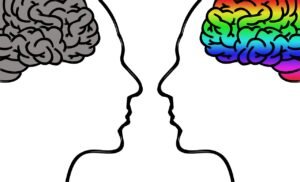 A: Here, “unconscious” simply means everything that is not in our conscious awareness. Our unconscious intelligence includes the responsivity of our breathing and our heartbeat. It includes the expressiveness of our hands and facial gestures. It includes the attitudes, abilities, and behaviors that we exhibit without having to consciously think about them.
For instance, we can walk or catch a ball – both are complex actions. Yet, we don’t have to think about all the steps involved in order to accomplish these tasks. We rely on our unconscious intelligence. Each of us has a lot of beneficial unconscious abilities! And yet, we may have unconscious learnings-understandings we came to as children about money, relationships, who we think we are, our own value-that have outlived their usefulness and now limit us in some way.
Fortunately, unconscious learning isn’t just a developmental phase we go through and then that’s it, we’re locked in. Throughout life our unconscious retains its ability to learn something new, or use something we already know in a different way. Hypnotherapy engages these natural learning abilities on behalf of who we are becoming rather than who we’ve been.
 A: While many people think of hypnosis mainly for habits like quitting smoking or losing weight, I offer a much broader range of hypnotherapy services. I help clients manage physical conditions such as migraines, sleep disorders, high blood pressure, and sexual dysfunction, as well as psychological issues including anxiety, stress, phobias, depression, and past trauma. I also support life challenges like career changes, relationship crises, aging, and personal growth, and offer spiritual guidance through past life regression, future life progression, and connecting with spiritual guides.
Additionally, I use hypnotherapy for medical purposes, including pain control, comfort during dental work or childbirth, and enhancing healing before, during, and after surgery.